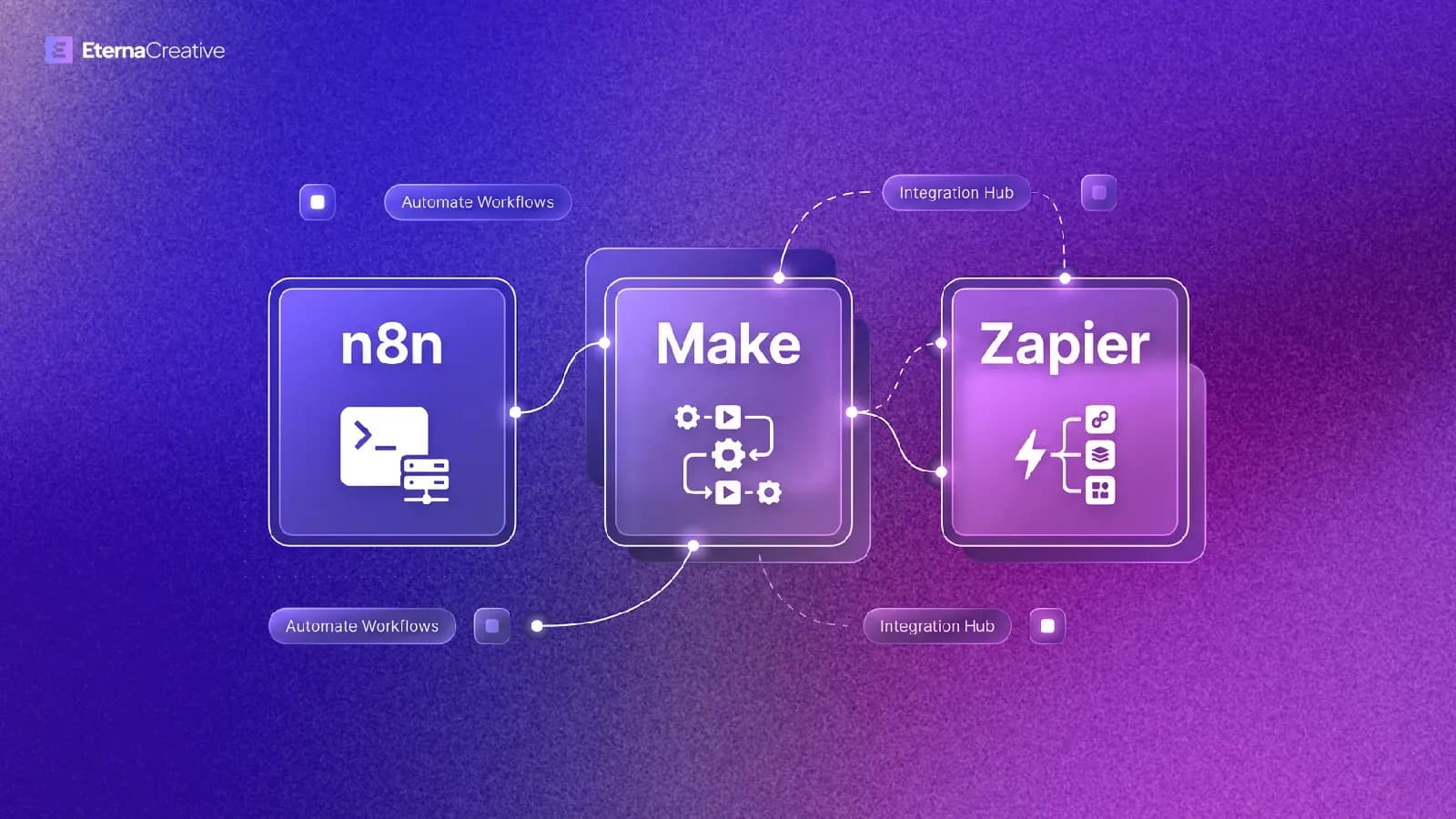
Zapier is fastest when you need a first workflow between tools you already pay for. Make is better for visual, branching scenarios without hosting anything. n8n wins when you want to own the workflows - self-host or cloud - and treat them like software. Start with one paid workflow. Expand after it pays back.
TL;DR
- Zapier: best for a first high-ROI workflow when connectors exist and volume is modest. It bills per task, so a five-step Zap is five tasks.
- Make: strong visual builder for branching scenarios without owning infra. It bills per operation (each module that runs).
- n8n: best when ownership, self-hosting, and deeper control matter. Cloud bills per workflow execution. Self-host Community is unlimited executions; you pay infrastructure.
- Most teams should start with one paid workflow, prove hours back, then expand. Tool religion second.
- When the canvas is the bottleneck, the whole loop can move into a custom application - same job, owned code. That is what happened with Zonik AI.
What you are actually buying
Teams shop automation tools like they shop CRMs: feature lists. The real decision is failure modes. Who notices when a sync silently stops? Who owns credentials? What happens when an AI step drafts the wrong email?
In production, all three tools fail the same way if nobody is watching. Zapier errors sit in task history. Make scenarios can stop mid-flow. n8n executions are logged, but silent issues still happen if you never wired an error workflow. Versioning is weak on Zapier, better-but-SaaS-bound on Make, and Git-shaped on n8n only if you pay for it or build the habit yourself. AI nodes will send the wrong email on any platform if the prompt and the data are unguarded.
Vendor-host means the vendor holds logs, credentials, and uptime. You can export a Zap or a scenario. You cannot pick up the box and move it. Self-hosted n8n is the other end: you own the instance, the database, the encryption key, and the backups. You also own misconfiguration. That is the trade.
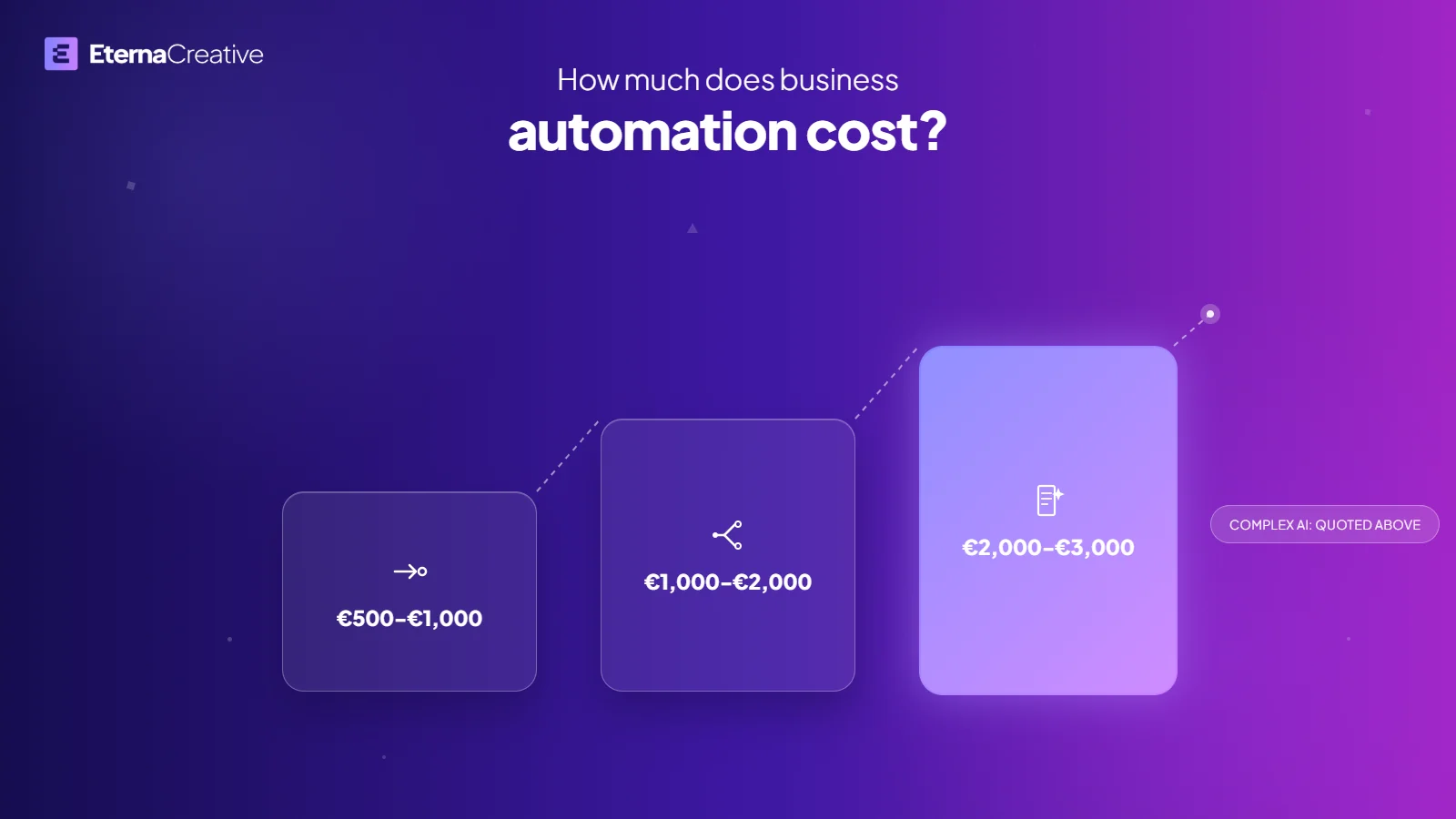
Wherever money, legal, or customer communication is at stake, keep a human on approvals - regardless of tool. A first live workflow is days to about two weeks, from €500, when the job is one hop with logging. Inventory that used to take a full pass can move at least 50% faster when the handoff is a system (Tap Group). That number is an outcome, not a tool logo.
n8n vs Make vs Zapier for business ops
Pricing below is a 2026 estimate for order of magnitude. Vendor pages change. Count what they actually bill: Zapier tasks, Make operations, n8n Cloud executions. A HubSpot deal that fans into Slack, a sheet, and an email is not "one event" on Zapier or Make.
| Zapier | Make | n8n | |
|---|---|---|---|
| Time to first workflow | Fastest for common SaaS pairs | Fast once you learn the canvas | Fast with a builder who knows it |
| How you are billed | Per task (each step) | Per operation (each module) | Cloud: per workflow run. Self-host: infra, not execution count |
| Volume (10k-50k events/month, estimate) | Steep. Multi-step Zaps multiply the bill | Usually cheaper at the same volume | Cloud is cheap until execution count is the product. Then self-host |
| Ownership | Vendor-hosted | Vendor-hosted | Self-host or cloud; you can export and move the instance |
| Complex branching | Possible; can get expensive | Excellent visual scenarios | Excellent; code nodes when needed |
| HubSpot ↔ Slack | Enough for a simple alert | Enough for a simple alert | When you need custom logic or data on your infra |
| Ops maturity | Great connectors | Strong for power users | Strong for engineering-minded ops |
| Best first use | Lead capture to CRM to notify | Multi-step ops with filters | Owned workflows plus monitoring |
| Hire help when | You need a linear Zap live this week | One person already thinks in Make | You want a system your team can run |
Zapier
Best for a reliable connector tomorrow when the workflow is mostly linear. New HubSpot deal to Slack. Form to CRM. Invoice created to a ping. If the pair exists in the directory and volume is modest, Zapier is the shortest path to a paid result.
The trade-off is task cost at volume, and zombie Zaps nobody owns. Caps, rate limits, and app-side changes fail quietly. There is no Git-style workflow versioning. That is fine until the Zap is revenue, compliance, or customer comms - then you need an owner and alerts, not another template.
Make
Best for visual, branching scenarios without hosting anything. Filters, routers, and aggregators are the product. CRM intake that enriches, scores, and assigns is a Make job if one operator already thinks in scenarios and you are happy on their cloud.
The trade-off is complexity that only one person understands. Operation limits and API changes stop a scenario mid-flow. Versioning is better than Zapier and still bound to Make. Unguarded AI modules send the wrong email here too. Make is a canvas, not a system of record.
n8n
Best for workflows you can own, extend, and monitor like software. That is why it is the default for many business ops systems - not because Zapier is bad, because control compounds. Cloud is the managed path: you pay per execution, export is possible, uptime is theirs. Self-host Community is unlimited executions on your VPS, database, and monitoring. You hold the encryption key. You hold the risk of a missing backup.
n8n wins on HubSpot to Slack when the hop is not the point - code nodes, a queue, data residency, or a workflow you can move. Invoice handoffs with custom parsing are the same story. If you are searching for an n8n automation agency, this is the stack those builds usually sit on.
How to pick for your team
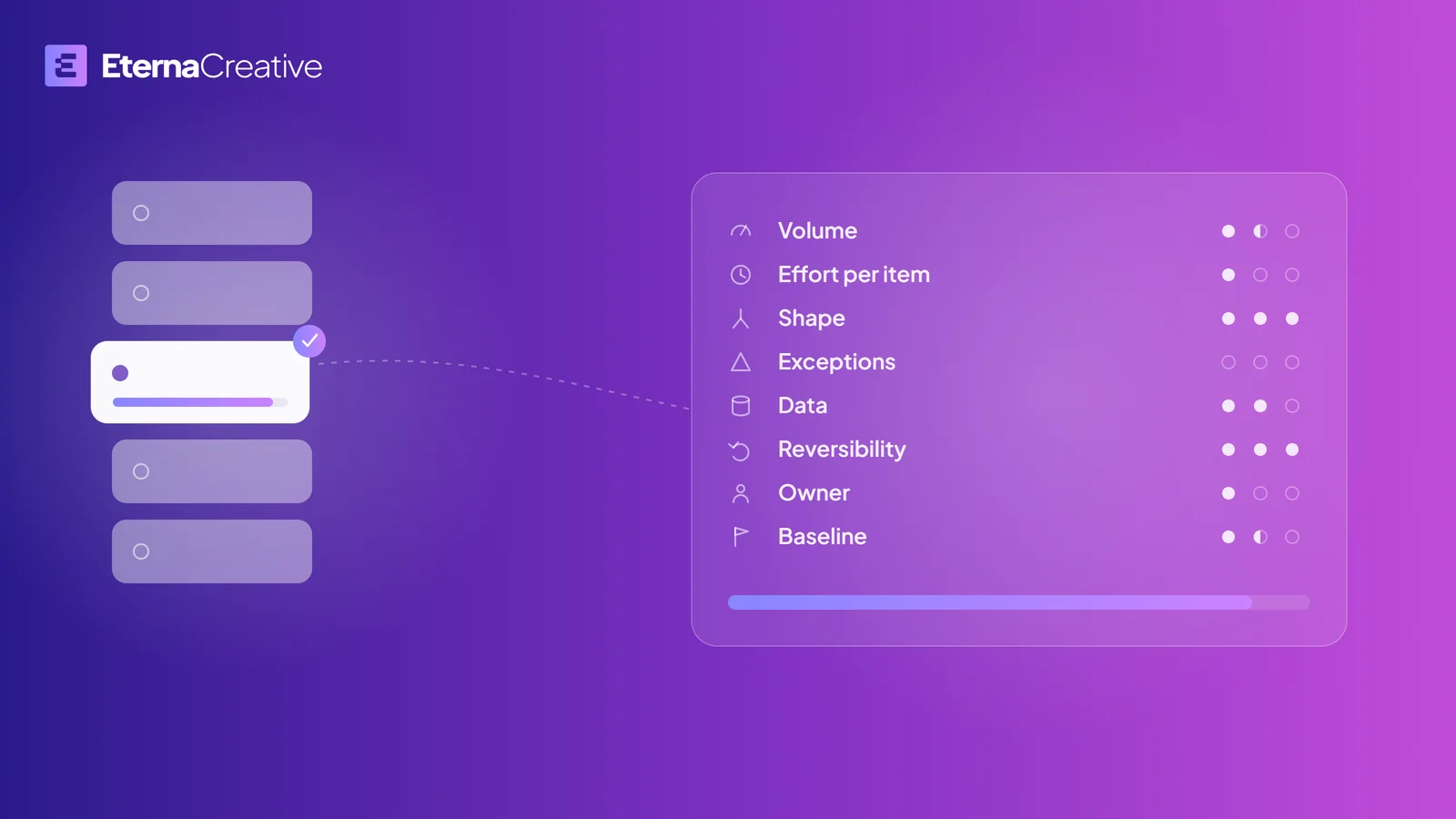
Do not start with a tool bake-off. Start with the bottleneck: which handoff still lives in someone's inbox, and what "done" looks like when it does not.
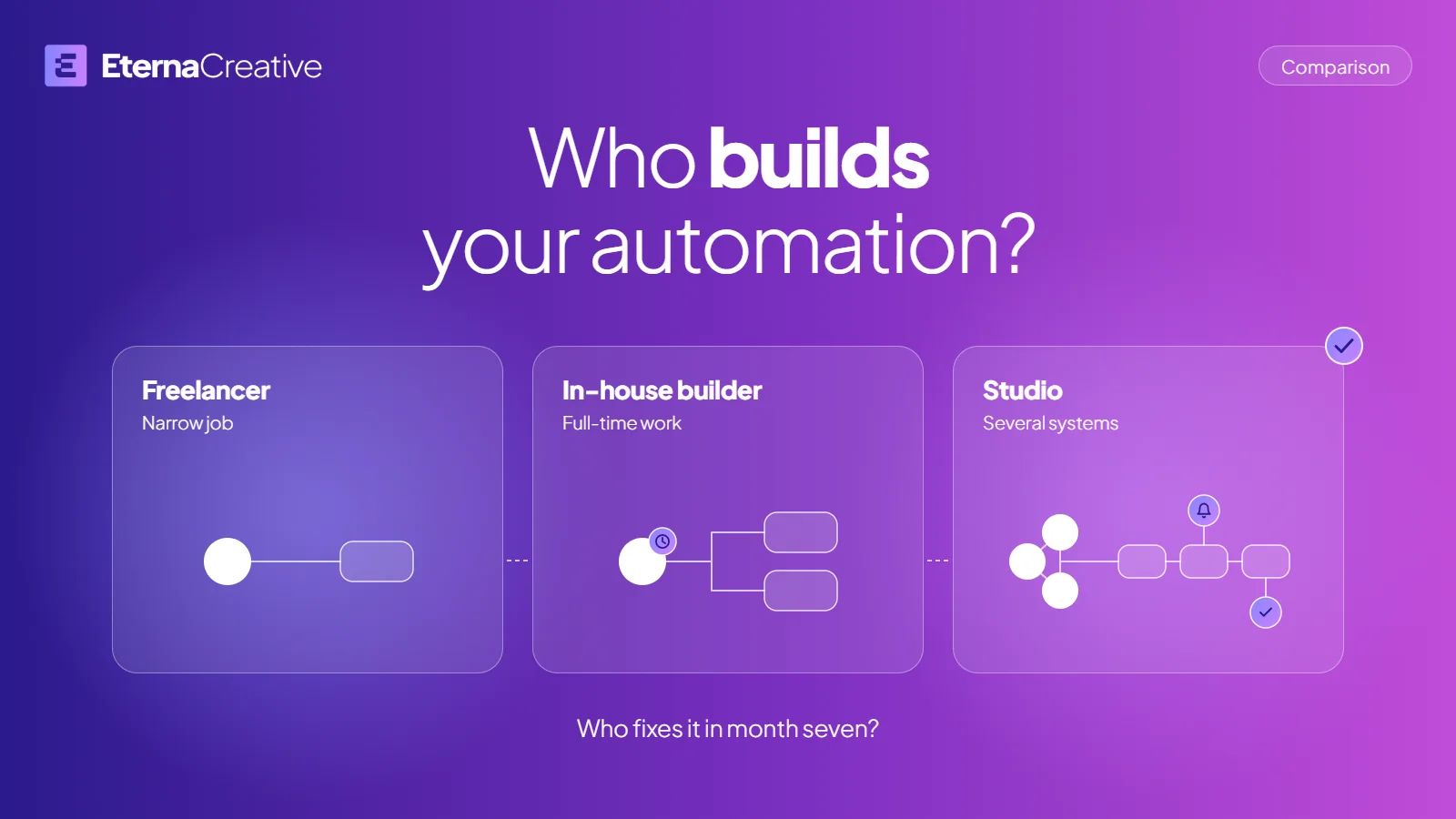
Stay DIY when the need is simple, low-risk, and you have hours to learn the canvas. Hire when the workflow touches revenue, customer data, or compliance; when Zapier or Make bills are already the problem; when silent failure would compound; or when nobody on the team will do DevOps. One owned workflow beats a folder of recipes.
Default when you want a system you can run for years: n8n. If you already live in Make and the scenario is healthy, do not switch for sport. If Zapier is the fastest way to prove a linear hop this week, use it - then decide whether that Zap should become a system.
A real n8n outbound OS: Lead Agents
Lead Agents did not need another Zap. Outbound lived across HeyReach, LinkedIn, Attio, spreadsheets, Discord, and ad hoc research. Replies and list changes did not reliably land in CRM. CSVs needed dedupe before anyone could work them.
The spine is n8n: HeyReach sync into Discord and Attio on a 30-minute cadence, a Prospect Ledger that normalizes and enriches, LinkedIn scheduling from their Outbound OS app, plus research agents you can call from Telegram. Roughly a dozen live systems; the write-up focuses on the outbound spine. That is what "treat workflows like software" looks like when a team already sells outbound for a living.
A real ops loop: Zonik AI
Zonik AI is load tracking that cannot sleep. Someone has to watch GPS, spot late ETAs, and call drivers - including at 3am. The first version of that loop was n8n: a Dispatcher that only pulls loads due for a check, a Worker that scores one load, VAPI voice check-ins when data goes dark, and a human exception queue when the automation cannot close the issue.
By design: a tightest check interval of five minutes, and one queue for humans when the automation cannot close the issue. n8n Cloud bills per workflow execution (n8n pricing page, checked September 20, 2026). Then the full loop moved into a custom application - same contract, owned code. n8n was how the logic was found. The app is how it runs.
When a workflow should become an app
The question after the canvas works is usually: can the whole n8n system move into custom code? Yes - when the canvas is the bottleneck. Not as a dump of JSON into an app. As a rewrite of the contract into software people can run.
The product is the contract, not the nodes. What wakes up. What it writes back. Who owns exceptions. On Zonik that contract was: one load, score it, write the next check time, call the driver when data goes dark, escalate the rest. State already lived in Xano and PostgreSQL. Voice already lived in VAPI and Twilio. n8n was the orchestrator until it was not the right place to run the loop.
A path that usually holds
- One paid workflow on whatever you already have - often Zapier - until it pays back.
- Move the ops spine to n8n when you need ownership, code nodes, or a queue you can inspect.
- Stay on n8n Cloud until execution count, data residency, or vendor uptime is the bottleneck.
- Self-host n8n when you still want the canvas, just not the Cloud bill. Same workflows. Your database, your encryption key, no execution-count ceiling.
- Move the full loop into a custom application when the canvas itself is the bottleneck - tight loops, operators who need a product they log into, or a team that will not live in n8n. That is Zonik. See no-code vs custom code for the product-side version of this choice.
What a transfer actually looks like
Freeze the contract first: inputs, outputs, exception states, human approval. Do not "convert" fifty nodes one-for-one. Rebuild the loop as an application with the same write-back. Replay real executions against both. Then cut over. n8n can stay as a sidecar for the odd integration. It is no longer the system of record for the job.
On Zonik, check intervals, risk rules, and call holds started as n8n knobs - easy to tune, easy to replay. When volume and the need for an owned runtime outgrew that, the whole Dispatcher + Worker loop moved into the app. The durable pieces were already owned. The rewrite promoted the knobs into tested code. That is transferring a full n8n workflow: finish the product. Do not keep a production fleet on a canvas because the canvas was how you learned.
When you should not rewrite
If you still have one Zap nobody owns, you do not need custom code. You need a first live workflow. If the process changes every week, a canvas you can inspect beats an app you have to deploy. If you want "real code" because it sounds more serious, that is theatre. Say so on the strategy call and pick the lighter job.
Rewrite when the canvas is the bottleneck. Zonik was that case. Most HubSpot-to-Slack jobs are not.
When tools are not enough
A pile of automations is not a system. When people need one place to run the work - approvals, status, exceptions - you need a custom front end on top of connected workflows. That is the jump from Zaps to an automation system, and sometimes to an application. If you are still mixing a funnel, a product, and busywork, read website vs application vs automation.
FAQ
Which is better for business ops: n8n, Make, or Zapier? Zapier for a first linear workflow. Make for visual branching without hosting. n8n when you want ownership and monitoring. Start with one paid workflow, then expand.
When should we hire an n8n automation agency? When HubSpot, Slack, CRM intake, or invoices still live in someone's inbox, and you need a first live workflow in days to about two weeks - not a hobby recipe. Also when Zapier bills, compliance, or silent failures are already the job.
Can you automate HubSpot and Slack with n8n? Yes. Same for CRM intake and invoice handoffs. Simple alerts are enough on Zapier or Make. Map the process first, then ship one workflow with human approval where it matters.
Do n8n workflows transfer into custom code? Yes, when the canvas is the bottleneck. Freeze the contract, rebuild the loop as an application, replay real executions, then cut over. Zonik AI started as a full n8n Dispatcher + Worker loop and is now a custom app with the same job. Do not rewrite a working canvas for theatre - most first workflows should stay on n8n.
Do you automate law firms or freight? Yes, as monthly programs - see law firm operations and freight operations. Do not buy a legal-AI roundup. Start with intake and busywork.
How to start without locking in a stack
Map the process first. Ship one high-ROI workflow. Expand only after it pays back. Tool choice follows the process - not the other way around. If the next honest step is self-host or an extracted Worker, that should be said before anyone sells you an app. Book a free strategy call if you want that map without a sales pitch in disguise. If the question is what the project costs rather than which tool, read how much business automation costs in 2026.