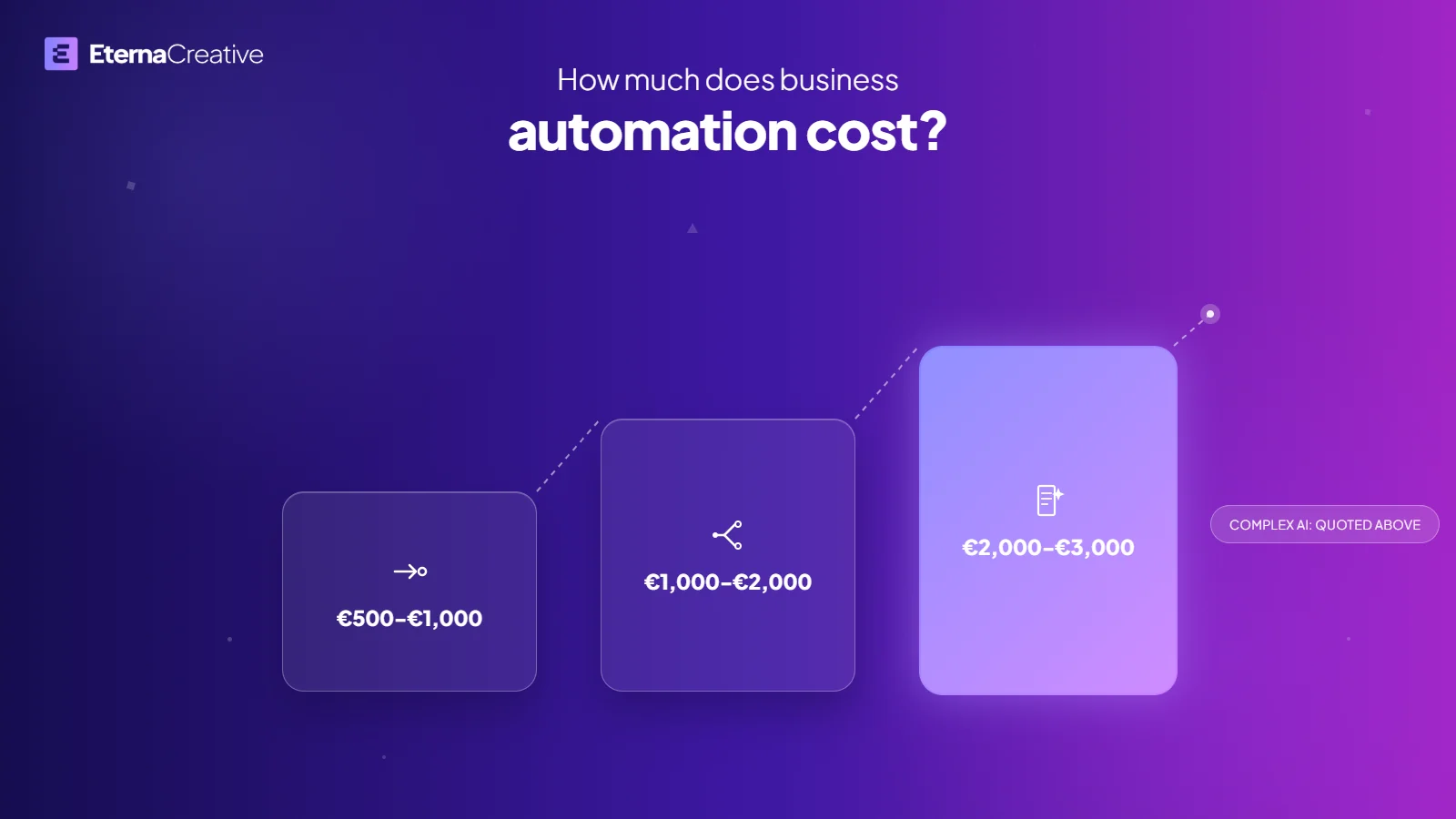
At Eterna, a single business automation costs €500 to €3,000, set by how complex it is. A follow-up email sequence sits at the low end; invoice extraction, quote preparation, and voice automations sit at the top. Automations with complex AI inside are quoted separately, and every price is fixed for the scope we agree.
The rest of this guide explains what puts an automation in each price range, what the price includes, what a quote often leaves out, and how to check whether it pays back. If you already know which process you want to automate, the automation service page shows how we build them.
What you're paying for
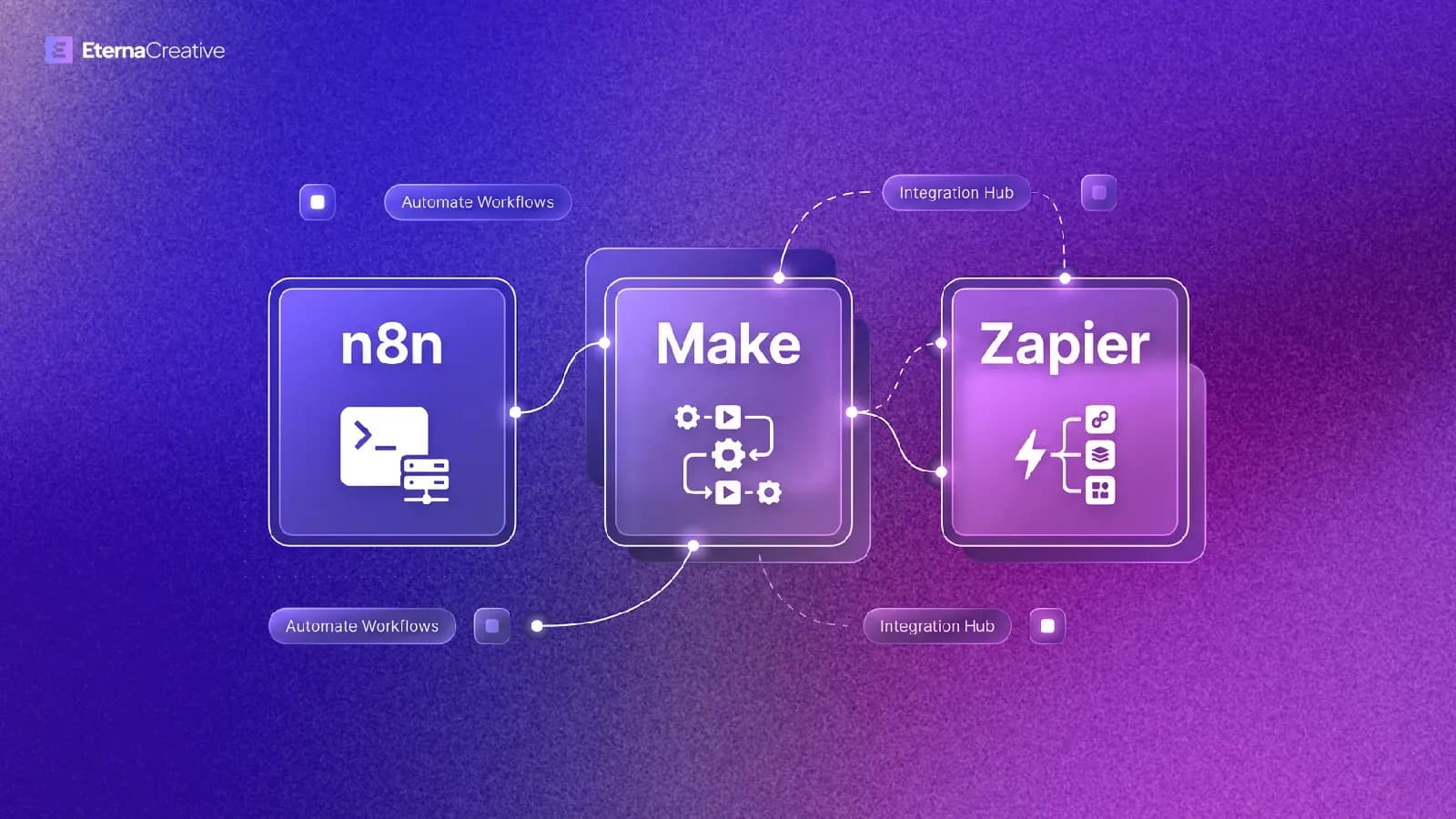
You're not paying for a tool. Tools like n8n, Make, and Zapier are cheap to start with, and we compared them in n8n vs Make vs Zapier for business ops.
You're paying for a workflow that runs without someone watching it. That means mapping how the work happens today, connecting the systems involved, deciding what happens when data is missing or wrong, testing it on real cases, and launching it so your team can rely on it. The hard part is rarely the happy path. It's the exceptions.
Three price ranges
| Price range | What it usually looks like | Examples |
|---|---|---|
| €500 to €1,000 | One trigger, a few tools, simple rules, no AI | Follow-up email sequence, sales meeting follow-up |
| €1,000 to €2,000 | Several tools, branches, and exceptions | Multi-step workflows where some steps wait for a person to approve |
| €2,000 to €3,000 | AI reads documents, prepares outputs, or speaks, with checks and a fallback | Invoice extraction, quote preparation, voice automation |
| Above €3,000 | Complex AI inside, several models, or heavy volume | Quoted after the audit call |
The exact price for your automation is fixed in the Blueprint, before you commit to anything.
What moves an automation into a higher range
Two automations that sound alike can land in different ranges. These are the drivers we look at on every audit call.
| Driver | Lower price when | Higher price when |
|---|---|---|
| Systems connected | Two tools with good APIs | Several tools, or an older system without an API |
| Data | Clean, consistent fields | Scans, free text, or a different format from every client |
| AI | Not needed | AI reads documents, drafts replies, or speaks |
| Exceptions | Every case follows the same path | Many edge cases, or a person has to approve some steps |
| Speed and volume | A few runs a day | Real time or high volume |
| Checks and monitoring | A simple failure alert | Checks on every field, logs, and a fallback queue |
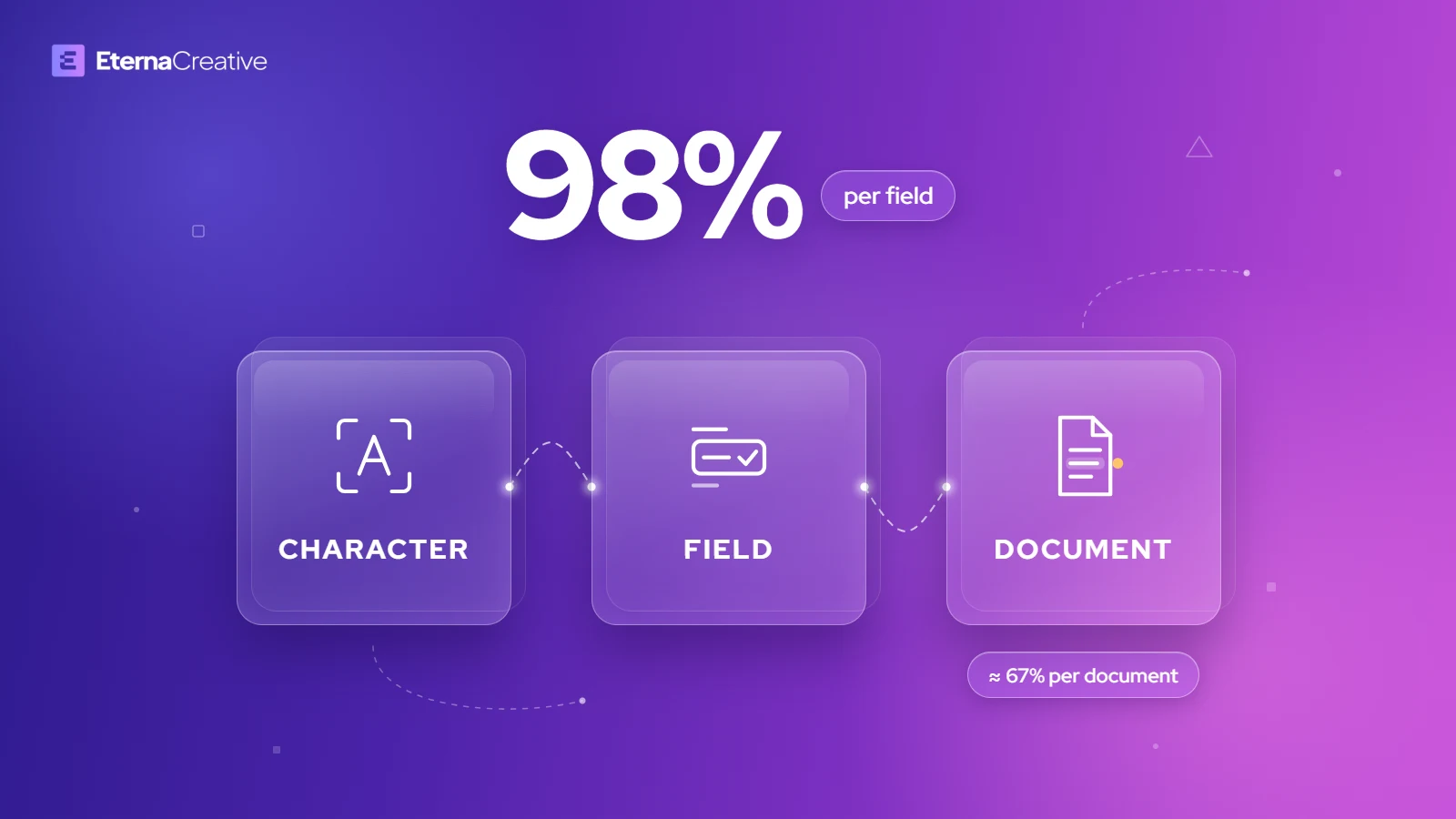
AI is the biggest single jump. Reading a clean digital invoice is one job; reading a scanned one where a single wrong number costs money is another. For a close look at why, read what 98% accuracy in AI document extraction really means.
What's included in the price
- A fixed price for the scope we agree. Each part is estimated by how heavy it is to build for production. The price changes only if the scope or the quantities change
- 2 free weeks after delivery: 1 week of testing and 1 week of fixes. If something doesn't work as agreed, we fix it until it does
- The Go-Live Guarantee: if your first workflow isn't live by the agreed date for reasons on our side, we keep working at no extra cost until it is
- Your ownership. What we build is yours
What a quote often leaves out
The build price is only part of what an automation costs you. Before you sign anything, with us or anyone else, ask about these four.
| Cost | What it is | What to ask |
|---|---|---|
| Tool and AI usage | Subscriptions for the automation platform and usage fees for AI models, charged by those providers | "What will this cost to run each month at our volume?" |
| Maintenance | Tools change, fields get renamed, and integrations break over time | "Who fixes it when something changes, and what does that cost?" |
| Scope changes | New steps or new cases added after the build starts | "What happens to the price if we add a case?" |
| Your team's time | Someone has to explain the process and test the result | "How many hours do you need from us, and when?" |
Maintenance is priced separately, and we always offer it after launch. Maintenance keeps what exists working: monitoring, fixes, and keeping integrations alive. New automations and new steps are improvements, scoped on their own.
Will it pay back? A quick check
You don't need a spreadsheet model. Four numbers from your own business are enough.
| Input | Where to find it |
|---|---|
| Hours the process takes each week | Ask the people who do it, or time it for a week |
| Cost of an hour of that person's time | Salary plus overhead, divided by working hours |
| Errors the process causes each month | Complaints, corrections, rework |
| Build price plus monthly running cost | The Blueprint or the quote |
Multiply hours by hourly cost to get what the manual process costs each week, then compare a year of that with the build price and a year of running costs. Add the cost of errors if you can put a number on them.
For scale: at Lead Agents, a client of ours, the automations we built save about 15 hours of ops work every week across 12 live n8n systems. Your number will be different; the point is to measure it before and after.
One-off automations, or a monthly program
Most companies start with one automation to prove it works, then add the next. Start with the smallest useful one: it shows your team what automation feels like before you spend more.
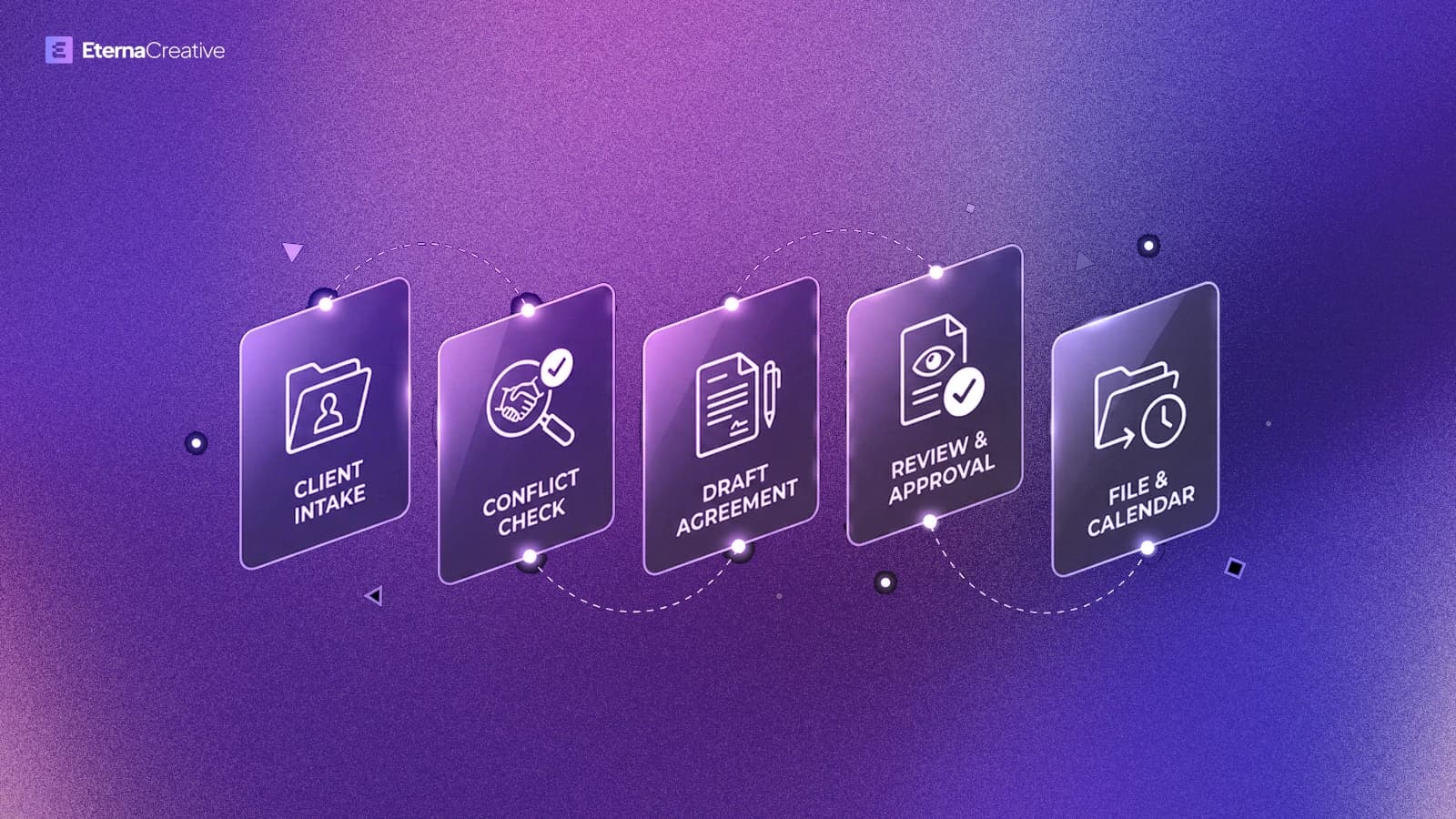
If you run a freight company or a law firm and already know you'll want a steady stream of automations, we also run monthly programs, Freight Operations and Legal Operations, at €1,500 or €2,500 a month with build and maintenance included. For law firms, a good first step is the five automations to build first.
How to start
- Free audit call, 30 minutes. We look at the process, check fit, and collect what we need
- A deeper call to map requirements, when the process needs it
- The Blueprint, presented live. What we build, what it costs, and when it ships, with the price fixed. It's free
How we handle AI inside an automation, from checks on every answer to what happens when it misses, is on How we build with AI.
FAQ
Why does one automation cost €500 and another €3,000?
Complexity. A follow-up sequence moves data between two tools with one rule. Invoice extraction has to read documents, check every field, and handle the cases where the AI gets it wrong. The more systems, exceptions, and AI an automation has, the higher its price.
Can I start with just one automation?
Yes, and we recommend it. Start with the smallest automation that saves real time. It proves the approach on your own process before you commit to more.
Is maintenance included in the price?
No. Maintenance is priced separately, and we always offer it after launch, because tools and integrations change over time. The 2 weeks after delivery, 1 of testing and 1 of fixes, are free.
Can the price change during the project?
Only if the scope or the quantities change. The price is fixed for the scope we agree in the Blueprint, and any change to that scope is priced before it's built.
What if the automation isn't live on time?
If your first workflow isn't live by the agreed date for reasons on our side, we keep working at no extra cost until it is. That's our Go-Live Guarantee.
What do you build automations with?
Usually n8n or custom code, whichever fits the job. We choose the tool after the audit call, based on your systems, your volume, and who will maintain it.
The verdict
A single automation costs €500 to €3,000, and where it lands depends on systems, data, AI, and exceptions, not on how the task sounds. Ask for a fixed price, the running costs, and a maintenance plan before you sign, and start with the smallest automation that saves real time. See how we build automations, or if you want to know which range your process lands in, book a free audit call and we'll tell you on the call.